

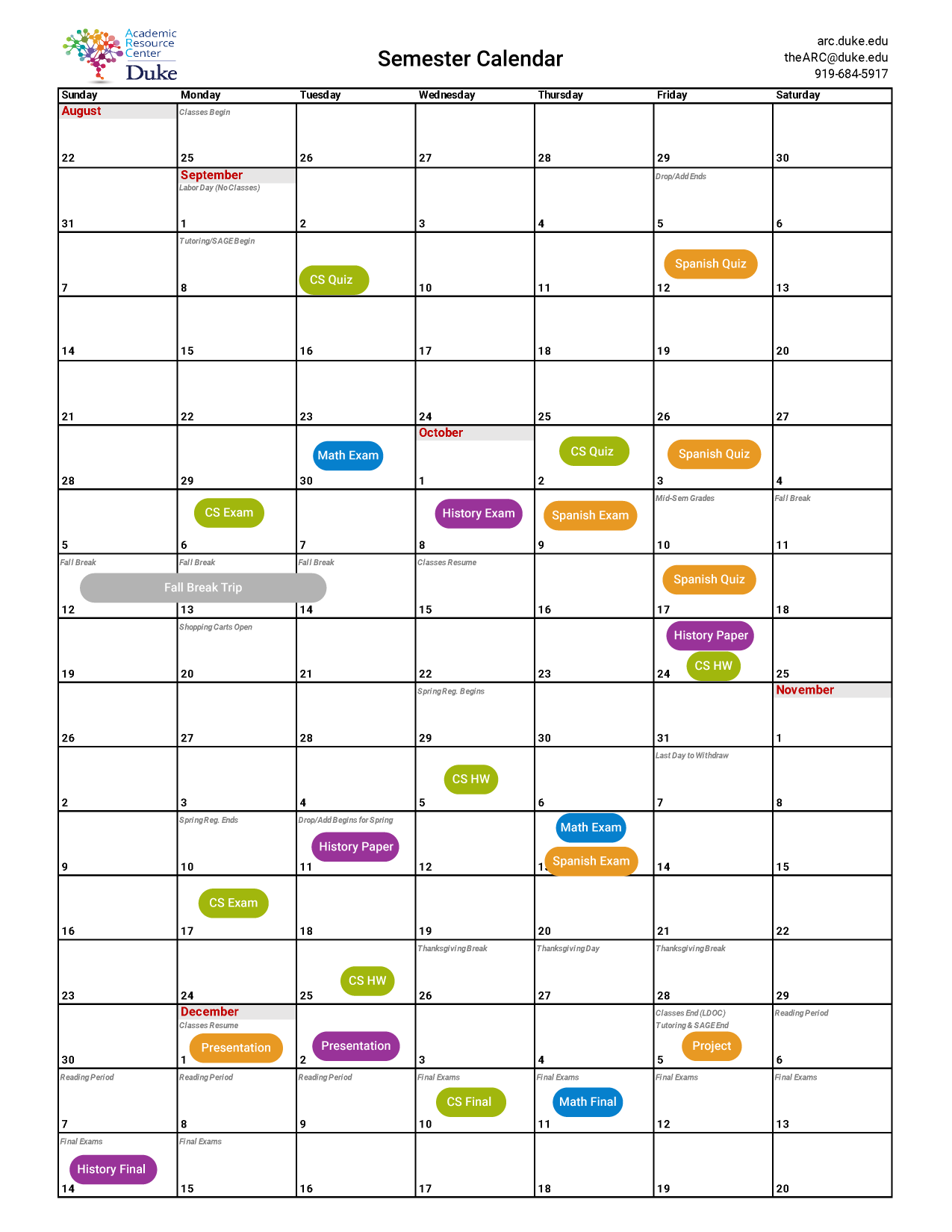
The semester calendar gives you a visual picture of your semester.
It isn’t just a scheduling tool - it’s a cognitive scaffold to help you manage time, reduce stress, and improve learning outcomes. Use it to avoid last-minute surprises and plan for midterms, projects, papers, and other significant events and deadlines.
How Does It Work?
- Gather all syllabi at the start of the semester
- Mark major due dates
-
- Record all exams, papers, and projects.
- Insert deadlines for applications (Duke Engage, etc.).
- Include significant campus activities (club events, games, etc.)
- Add personal commitments (trips, family events, etc.)
- Spot the Hot Spots
-
- My toughest week(s) will be:________
- Strategies I’ll use to manage it:_______
- Plan Backwards & Chunk Tasks
-
- Add interim milestones to big projects (research, outline, draft, review).
- For exams, start studying at least 1 week in advance - schedule study blocks.
- Update regularly as dates change and opportunities arise
-
- Pair with weekly planning
-
- Semester view provides the macro perspective
- Weekly and daily planners and to-do lists handle the micro details
Why It Works
- Big picture awareness: You can see the entire arc of the semester, which helps you anticipate busy weeks and avoid being blindsided by overlapping deadlines.
- Improves time management: By mapping out exams, projects, and papers, you can backward plan study sessions and break tasks into smaller chunks.
- Better prioritization: A calendar makes it easier to identify which assignments or exams require more preparation and helps you allocate effort accordingly.
- Supports executive function: A semester view externalizes memory and makes tracking commitments easier.
- Reduces Stress: Knowing what’s coming may lower anxiety by helping you feel more in control of your workload.
